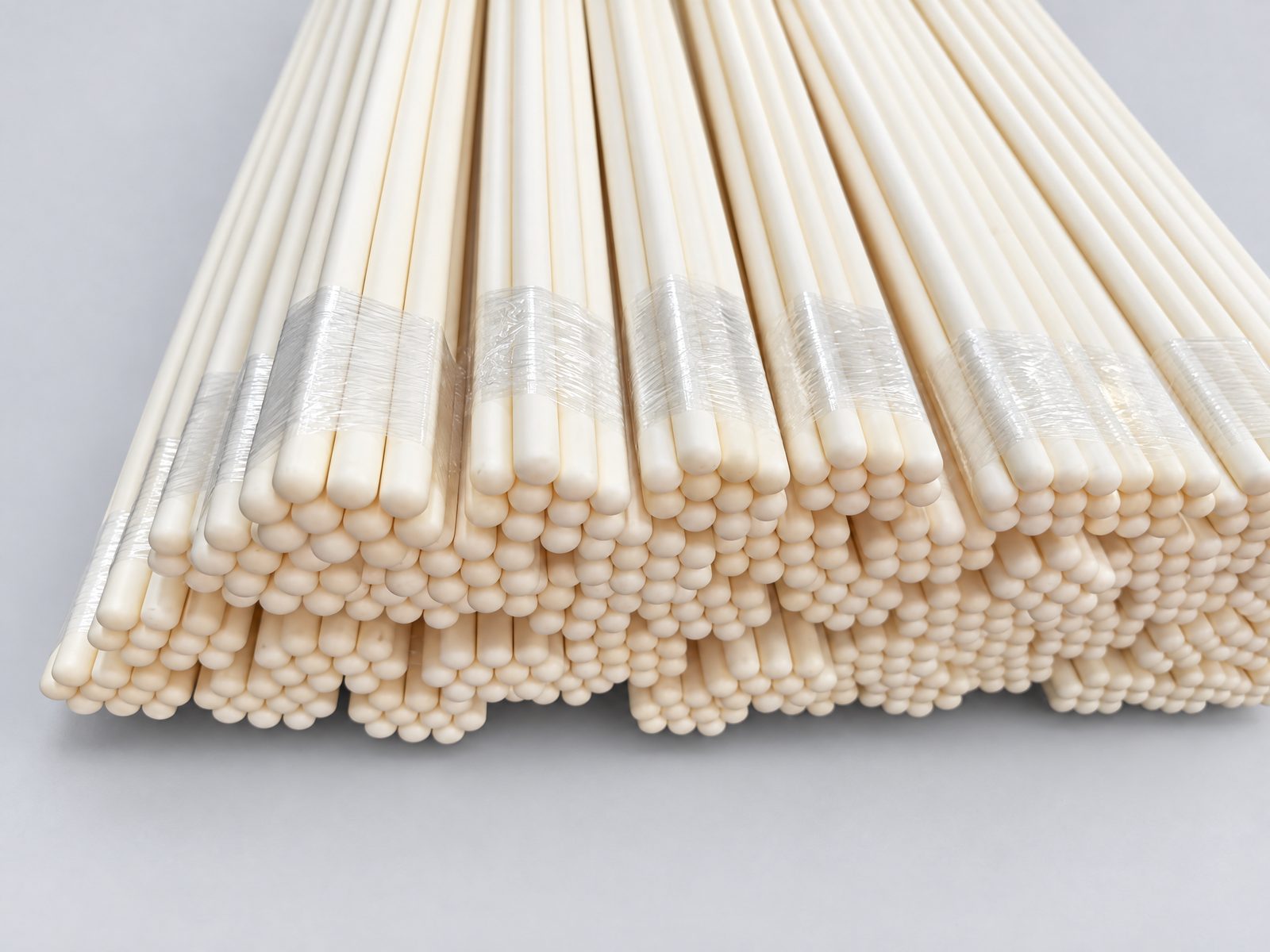
Thermowell and protection tube are overlapping names; WIKA distinguishes its solid-bar thermowells from fabricated metal tubes closed with a welded tip. GY Alumina supplies ceramic protection tubes, which must be specified by their dimensions, grade and end condition. A ceramic tube size alone does not establish a complete assembly’s pressure rating or process seal.
Compare the construction on the drawing
| Part | Construction | Specify |
|---|---|---|
| Solid bar | WIKA describes a thermowell machined from one piece of solid bar. | Stem profile, bore, process connection and insertion length; the manufacturer’s assembly requirements. |
| Metal tube | WIKA describes a fabricated protection tube closed with a welded solid tip. | Tube and tip materials, weld details, connection and the requirements for the complete installation. |
| Alumina tube | GY lists ceramic tubes with one end closed or both ends open. | OD × ID, overall length, usable internal depth, grade, end condition and tolerances. |
WIKA also uses both names together in its product category. Even its TW45 protection-tube page records a solid-machined copper-alloy option for short insertion lengths. Ask for the drawing and manufacturing details when a purchase order only says “thermowell.”
The ceramic tube is one component of the assembly
WIKA’s ceramic thermocouple designs in TE 65.80, page 7, show the ceramic tube cemented into a metal support carrying the process connection. This is a WIKA assembly example, not a mounting design supplied or approved by GY.
When replacing the ceramic part, identify where the support ends and where insertion length starts. Show overall tube length and usable internal depth separately; the closed tip occupies part of the overall length. Our tube-end drawings distinguish a closed tip from an open-ended tube. Check the sensor or insert against the minimum finished bore and usable depth, rather than nominal ID alone.
Do not infer a pressure seal, vacuum suitability or permission to remove the sensor during operation from the ceramic grade. WIKA’s TE 65.80, page 10, also says that process-gas diffusion cannot be ruled out at high temperature. Confirm sealing and service requirements with the complete assembly’s designer.
Check the scope of the assembly calculation
WIKA limits its ASME PTC 19.3 TW-2016 calculation to solid-material thermowells in tapered, straight or stepped designs. Its IN 00.15 note, pages 1–2, covers pipes and process vessels and excludes process or industrial furnaces from that calculation’s scope. The system designer supplies the process data, including temperature, velocity, density and pressure.
Those published limits are a reason to check the assessment method with the assembly designer. They do not validate a catalog alumina tube by putting its OD and ID into a metal-thermowell calculator. GY does not publish a pressure rating or ASME assembly approval for the tubes listed here.
Specify the ceramic replacement by dimensions
We list 18 standard protection-tube sizes, usually in stock; lengths and end configurations are confirmed for the order. For example, these are distinct nominal bore and wall dimensions, not interchangeable pressure classes:
| OD × ID (mm) | Nominal wall (mm) | Product drawing and quotation |
|---|---|---|
| 10×6 | 2 | Quote this size |
| 15×11 | 2 | Quote this size |
| 24×18 | 3 | Quote this size |
- OD × ID × overall length, usable internal depth and the tolerances that determine insert fit.
- One end closed or both ends open; any end slots or side holes, dimensioned on the drawing.
- Alumina grade, operating temperature, atmosphere and any pressure, vacuum or flow requirements for the assembly designer to assess.
- Mounting drawing, supported and inserted lengths, quantity and required delivery date.
Use the full size and length reference to compare nominal dimensions. Include the existing part drawing when you request a ceramic tube quotation; the quotation confirms the part’s grade, dimensions and end configuration.
Questions buyers ask
- What is the difference between a thermowell and a protection tube?
- The names can overlap. WIKA’s metal-design comparison distinguishes thermowells machined from solid bar from fabricated protection tubes closed with a welded tip. GY’s alumina protection tubes are ceramic components, so specify material, construction and assembly requirements rather than relying on the name.
- What should I specify when ordering a ceramic thermowell?
- Send the ceramic tube drawing: OD, ID, overall length, usable internal depth, end condition, grade and tolerances. Include the mounting drawing and process conditions. A nominal ceramic size does not establish the complete assembly’s pressure rating or process seal.
- Can an ASME thermowell calculation validate an alumina protection tube?
- Do not assume it can. WIKA limits its ASME PTC 19.3 TW-2016 calculation to solid-material thermowell designs in pipes or process vessels; its IN 00.15 note excludes process and industrial furnaces from that calculation’s scope. The assembly designer must identify the applicable assessment for the ceramic component and complete installation.
Sources
- WIKA: thermowells and protection tubes, construction and calculation FAQ
- WIKA TW45: threaded metal protection tube and construction exception
- WIKA IN 00.15, August 2025: wake-frequency calculation scope, pages 1–2
- WIKA data sheet TE 65.80, thermocouples with ceramic protection tube
- Our own figures: the factory’s standard-size list, 2026 orders and test report, as recorded in our product catalog.