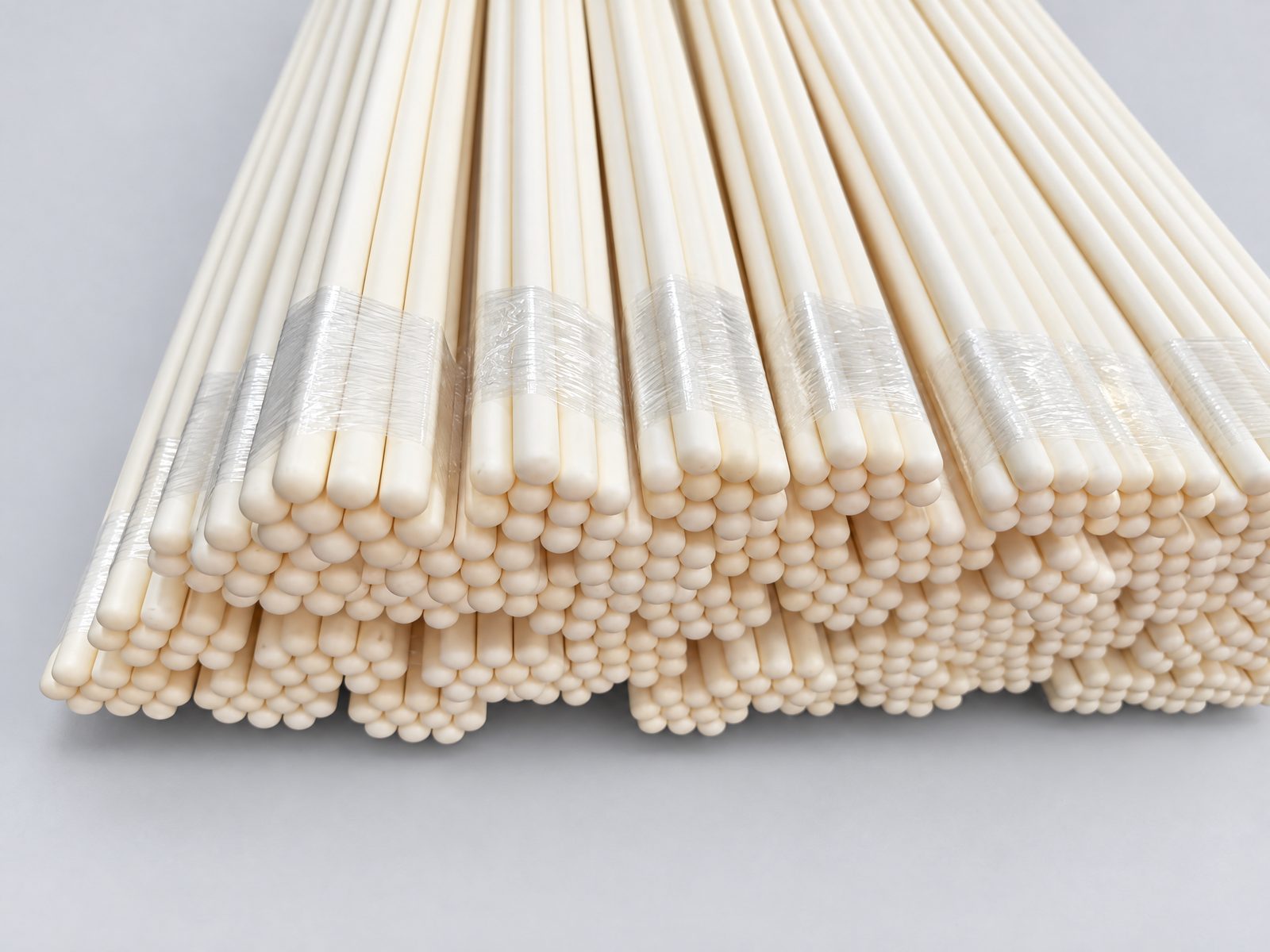
A refractory ceramic is a nonmetallic inorganic material engineered to retain mechanical strength, chemical stability, corrosion resistance, and thermal insulation at high operating temperatures. Commercial formulations are built primarily on the oxides of aluminum (alumina), silicon (silica), magnesium (magnesia), and calcium (lime), alongside carbon and silicon carbide systems, and are supplied as shaped bricks, unshaped monolithics, or high-temperature insulation wool. Material classifications and test methods are governed through 71 standards maintained by ASTM Committee C08 and 95 published standards under ISO Technical Committee 33.
What Is Refractory Ceramic and How Ceramic and Refractory Fields Relate
When engineers ask what is refractory ceramic, the functional answer comes down to three duties inside a hot vessel: holding mechanical loads without slumping, resisting chemical attack from molten metal, slag, glass, or process gas, and limiting heat loss through the shell. As documented by The American Ceramic Society (ACerS), refractories are the ceramic materials that line reactors, transport vessels, furnaces, and kilns across heavy industry so high-temperature processing can run safely.
Buyers often search for refractory and ceramic, ceramic and refractory, or refractory & ceramic as paired terms because refractories are a specialized branch of the broader ceramic family rather than a separate class of matter. Within the 11 technical divisions of ACerS, Refractory Ceramics stands alongside Engineering Ceramics, Structural Clay Products, Glass and Optical Materials, Cements, Electronics, and Energy Materials and Systems. While engineering ceramics focus on dense wear parts, coatings, and structural components, ceramic refractory materials are formulated specifically with graded coarse and fine grains, controlled porosity, and high-temperature bond phases to survive thermal cycling and corrosive slags inside large industrial linings.
Two consensus bodies maintain the global rulebook for testing and classifying nonmetallic commercial refractory products. In the United States and internationally, ASTM Committee C08 on Refractories, established in 1914, operates 8 technical subcommittees with 59 members representing more than 11 countries and maintains jurisdiction over 71 standards in Volume 15.01 of the Annual Book of ASTM Standards. At the international level, ISO/TC 33 on Refractories, created in 1947 and managed through the British Standards Institution secretariat, oversees 95 published ISO standards and 10 standards under development across 16 participating members and 24 observing members.
Chemical Classification: Acidic, Alumina-Silica, Basic, and Non-Oxide Systems
ASTM refractory standards note that commercial refractories are commonly produced from the oxides of aluminum (alumina, Al2O3), silicon (silica, SiO2), magnesium (magnesia, MgO), and calcium (lime, CaO), paired with zircon, chromium oxide, carbon, and synthetic carbides or nitrides. In furnace engineering, these compositions are grouped by how they react chemically with molten slags, fluxes, alkali vapors, and furnace gases at operating temperature.
Matching lining chemistry to process slag chemistry prevents rapid fluxing and washout. Acidic refractories rich in silica resist acidic slags and acid condensates, while basic refractories built on magnesia or dead-burned dolomite resist lime-rich basic steelmaking and cement slags. Alumina-silica, mullite, high-alumina, and carbon-bearing or silicon carbide grades bridge neutral, amphoteric, and reducing environments where thermal shock or alkali and slag erosion must be balanced together. Both ASTM Committee C08 and ISO/TC 33 publish dedicated product classifications and chemical analysis protocols for each group.
| Chemical Family | Primary Constituents | Current Classification or Analysis Standards | Primary Service Compatibility Focus |
|---|---|---|---|
| Acidic Refractories | Silica (SiO2), residual quartz phases, zircon (ZrSiO4), acid-resisting aluminosilicates | ASTM C416-97(2022), ASTM C545-97(2022), ISO 10080:1990, ISO 16206:2025 | Acidic slags, glass tank superstructures, sulfuric acid environments (ISO 8890:1988) |
| Alumina-Silica and AZS | Fireclay, mullite, homogenized bauxite, alumina (Al2O3), calcium hexaluminate, AZS with 5% to 45% ZrO2 | ASTM C27-98(2022), ASTM C467-14(2023), ASTM C1547-02(2022), ISO 10081-1:2003, ISO 21079-1:2008 | Broad thermal cycling, molten glass contact, nonferrous melting, reheating furnaces, kilns |
| Basic Refractories | Dead-burned magnesite or periclase (MgO), dead-burned dolomite (CaO and MgO), chrome-magnesia, spinel, magnesia-carbon | ASTM C455-07(2022), ISO 10058-1:2008, ISO 10081-2:2003 and Cor 1:2008 (below 7% carbon), ISO 10081-3:2003 (7% to 50% carbon) | Lime-rich basic steelmaking slags, oxygen converters, electric arc furnaces, rotary cement kilns |
| Carbon and Non-Oxide Special | Coked carbon, graphite, silicon carbide (SiC), silicon nitride, silicon oxynitride, sialon, ultra-high-temperature ceramics (UHTC) | ISO 10081-4:2014, ISO 10060:1993, ASTM C831-18(2023), ISO 21068-1:2024 to ISO 21068-4:2024 | Blast furnace hearths, reducing atmospheres, severe abrasion, molten metal non-wetting zones |
Refractory Ceramic Goods: Shaped Bricks, Monolithics, and Insulation Wools
In international trade and procurement specifications, finished lining products are often grouped under the term refractory ceramic goods. ISO/TC 33 works in direct liaison with both the World Customs Organization (WCO) and the World Refractories Association (WRA) so product terminology in ISO 836:2001 and ASTM C71-12(2024) aligns across customs schedules, mill purchase orders, and engineering drawings. As summarized by the WRA, every industrial reactor, transport ladle, or kiln lining combines three physical forms: shaped bricks, unshaped monolithics, and high-temperature insulation wool.
- Shaped dense refractory bricks and blocks: Pressed or fusion-cast units delivered fired or carbon-bonded in standardized geometries. ASTM C861-93(2026) and ASTM C909-18(2022) define metric and modular brick series, while ISO 5019-1:1984 through ISO 5019-6:2005 and ISO 5417:1986 standardize rectangular bricks, arch bricks, rectangular checker bricks for regenerative glass and stove chambers, dome bricks for electric arc furnace roofs, skewbacks, basic converter bricks, and rotary kiln bricks. Fusion-cast blocks, classified under ASTM C1547-02(2022), provide near-zero-porosity shapes for glass melting tanks.
- Unshaped (monolithic) refractories and mortars: Supplied unfired in bags, drums, or bulk totes and formed directly on the vessel wall, then cured and sintered in place. ISO 1927-1:2012 through ISO 1927-8:2012 and ASTM Subcommittee C08.09 cover alumina and alumina-silicate castables (ASTM C401-12(2022)), self-flowing castables (ASTM C1446-19(2025)), basic castables, plastic refractories and ramming mixes (ASTM C673-97(2022)), cold and wet gunning mixes (ASTM C903-15(2020), ISO 18886:2016, ISO 20182:2024), and pre-formed monolithic shapes. Refractory mortars for bricklaying joints are specified separately under ASTM C1655-06(2022) and ISO 13765-1:2004 through ISO 13765-7:2021.
- High-temperature insulation products: Lightweight porous bodies that cut shell heat loss behind a dense hot-face lining or serve directly as hot-face linings in clean gas or electric furnaces. This group covers shaped insulating firebrick classified under ASTM C155-97(2022) and ISO 2245:2006, plus high-temperature insulation wool and ceramic fiber products tested under ISO 10635:1999.
Thermomechanical Properties, Standard Tests, and Lab Precision
A refractory datasheet lists room-temperature and high-temperature numbers, but smart buyers read every figure alongside the test standard that produced it and the statistical scatter built into that test. Standard softening and high-temperature structural tests include Pyrometric Cone Equivalent (PCE) under ASTM C24-09(2022) and ISO 528:1983, refractoriness under load (RUL) under ASTM C16-03(2025) and ISO 1893:2007, thermal expansion under ISO 16835:2014, compressive creep under load via ASTM C832-21(2026) and ISO 3187:1989, and elevated-temperature compressive strength under ISO 22685:2021. Elastic stiffness is tracked non-destructively by impulse excitation of vibration at room temperature (ASTM C1548-02(2025), ISO 12680-1:2005) and elevated temperature (ISO 22605:2020).
A 2021 technical review in the American Ceramic Society Bulletin examined the most widely requested ASTM Committee C08 datasheet tests, comparing within-laboratory repeatability against between-laboratory reproducibility. The table below pairs those published precision percentages with the current edition of each ASTM test method.
| Property Tested | Current ASTM Standard | Material or Technique | Within-Lab Precision | Between-Lab Precision |
|---|---|---|---|---|
| High-temperature load deformation | ASTM C16-03(2025) | Dense 70% alumina brick | +/-29% | +/-20% |
| Cold crushing strength (CCS) | ASTM C133-24 | Dense brick / Dense castable | +/-12% / +/-7% | +/-45% / +/-23% |
| Modulus of rupture (MOR, ambient) | ASTM C133-24 | Dense brick / Dense castable | +/-10% / +/-9% | +/-40% / +/-20% |
| Elevated-temperature MOR | ASTM C583-15(2026) | Alumina brick | +/-22% | +/-36% |
| Apparent porosity | ASTM C830-00(2023) | Vacuum pressure on shapes | +/-3% | +/-4% |
| Bulk density | ASTM C830-00(2023) | Vacuum pressure on shapes | +/-0.5% | +/-0.6% |
| Room-temperature abrasion | ASTM C704/C704M-15(2022)e1 | High alumina brick / Conventional castable | +/-26% / +/-55% | +/-47% / +/-78% |
| Mean thermal conductivity | ASTM C201-24 | Calorimeter hot plate | +/-3.4% | +/-9% |
| Thermal shock cycling loss | ASTM C1171-16(2022)e1 | MOR lost / Sonic velocity lost | +/-59% / +/-17% | +/-65% / +/-23% |
| Castable flow consistency | ASTM C1445-13(2025) | Calibrated flow table | +/-25% | +/-40% |
Worked Example: Reading Supplier Datasheets Using Reproducibility Limits
Suppose your engineering team is qualifying two refractory brick datasheets tested in different laboratories. In ASTM interlaboratory studies, the reproducibility index (R) defines the band within which two independent laboratories testing the exact same material are expected to agree 19 times out of 20 (a 95% confidence interval, exceeded in no more than 5% of comparisons). In the analytical example given in the American Ceramic Society Bulletin review, a measured value of 46.57% paired with a reproducibility index of 0.543 yields a 95% interlaboratory interval from 46.03% to 47.11%. As that review notes, reproducibility bands on physical and mechanical refractory tests are far wider.
In the American Ceramic Society Bulletin review of ASTM Committee C08 tests, the +/-40% between-laboratory precision for dense brick modulus of rupture is wide compared with its +/-10% within-laboratory precision, and the +/-45% between-laboratory variation for dense brick cold crushing strength is far wider than its +/-12% within-laboratory variation. Even small procedural details swing strength numbers: in ASTM C133 testing, switching bearing pads from cardboard to cellulose fiber wall board can raise the measured strength value by 50%, and testing larger specimen volumes produces lower average strength values with higher statistical reliability because brittle fracture is governed by the largest internal flaws. By contrast, vacuum-pressure bulk density (+/-0.6% between laboratories) and apparent porosity (+/-4% between laboratories) show tight agreement across labs, making density and porosity far cleaner incoming quality gates than cold crushing strength.
Thermal conductivity specifications carry a second trap when the purchase order omits the test standard. Calorimeter testing under ASTM C201-24 measures mean thermal conductivity across a temperature gradient, whereas the platinum resistance thermometer hot-wire method under ASTM C1113/C1113M-09(2024) (and ISO 8894-1:2010 or ISO 8894-2:2007) measures thermal conductivity at a specific temperature. Hot-wire k-values typically run 10% to 20% higher than ASTM C201 values on the same material. If you calculate shell cold-face temperatures or set a maximum k-value limit, always state whether your limit applies to C201 mean conductivity or C1113 hot-wire conductivity.
Failure Modes, Slag and Gas Attack, and Monolithic Dry-Out Control
Read more
Laboratory cold strength rarely predicts how long a furnace lining lasts. As highlighted in the American Ceramic Society Bulletin analysis of ASTM C583, refractories engineered for unusually high elevated-temperature modulus of rupture generally exhibit worse thermal shock resistance and can suffer shorter campaign lives. Real industrial linings usually come out of service because of thermomechanical spalling, chemical fluxing, gas-phase disintegration, mechanical scouring, or steam damage during initial heat-up.
- Thermal cycling and structural reheat spalling: Rapid temperature swings create tensile stress cracks behind the hot face. ASTM C1171-16(2022)e1 and ISO 21736:2020 evaluate thermal shock resistance, where tracking sonic velocity loss (+/-23% between laboratories) is much tighter than tracking MOR loss (+/-65%). Permanent linear shrinkage or expansion during extended soaking, which opens brick joints or pinches arches, is measured on dense brick under ASTM C113-14(2025) and ISO 2478:2025 and on insulating firebrick under ASTM C210-95(2024) and ISO 2477:2005.
- Slag, molten glass, and vapor corrosion: Dynamic slag erosion and penetration are benchmarked by rotary slag testing under ASTM C874-20(2026). Glass-industry linings rely on isothermal molten glass corrosion testing (ASTM C621-09(2022)), superstructure vapor attack testing (ASTM C987-10(2023)), and AZS fusion-cast glass exudation testing (ASTM C1223-19(2023)). In blast furnaces and chemical kilns, alkali vapor attack on carbon refractories is tested under ASTM C454-10(2022).
- Carbon monoxide, oxidation, and hydration breakdown: In reducing carbon monoxide atmospheres, iron oxide impurities inside a refractory can catalyze carbon deposition inside pores and shatter the brick, a failure mode tested under ASTM C288-20(2025) and ISO 12676:2000. Silicon carbide linings in oxidizing flue gases are evaluated for oxidation growth under ASTM C863-00(2022). Basic magnesia, periclase, and dead-burned dolomite bricks and grains must be protected from moisture during storage and wet masonry work to prevent expansive hydration cracking, evaluated under ASTM C456-18(2023), ASTM C492-92(2023), and ASTM C544-18(2023).
- Monolithic dewatering and explosive spalling prevention: Castable linings lock free and chemically bound water inside tight pore networks. Over-watering destroys density, while heating too fast traps high-pressure steam and causes explosive spalling. Field teams verify mix water using ball-in-hand (ASTM C860-15(2025)), flow table (ASTM C1445-13(2025)), or self-flow (ASTM C1446-19(2025)) tests, track hydraulic cement curing heat via exothermic profiles (ASTM C1656-13(2023)), follow controlled firing practices (ASTM C865-22), and qualify low-permeability mixes for explosive spalling resistance under ISO 16334:2013. Recent monolithic development reported by ACerS also uses colloidal binders to replace calcium aluminate cement (CAC), easing dewatering and removing lime flux phases.
Manufacturing Workflows and Consuming Industries
Read more
Producing consistent shaped or unshaped refractories starts with raw material sampling (ISO 8656-1:1988), multi-fraction crushing, and strict particle packing controlled through sieve analysis and water content checks (ASTM C92-95(2022)e1) and granular bulk density testing (ASTM C357-07(2022)e1, ISO 8840:2021). Raw and fired compositions are verified by fused cast-bead X-ray fluorescence under ISO 12677:2011 (with specialized sample preparation for silicon carbide under ISO 16169:2018) or wet chemical, atomic absorption, and ICP spectrometry under ISO 26845:2008 and ISO 14720-2:2026. Batches are blended with hydraulic, chemical, carbon, or boron-oxide-bearing binders (ISO 21078-2:2006), formed by pressing, casting, ramming, gunning, or fusion casting, dried, coked if carbon-bearing (ASTM C607-88(2024)), and fired before dimensional and corner-defect inspection under ISO 12678-1:1996 and ISO 12678-2:1996.
According to ACerS and the World Refractories Association, refractory engineering underpins iron and steel (hot blast stoves, basic oxygen converters, electric arc furnaces, and transfer ladles), aluminum, copper, and other nonferrous smelting, glass tanks, cement and lime rotary kilns, minerals processing, petrochemicals (including oxygen-enriched sulfur recovery reaction furnaces), pulp and paper recovery boilers, power generation, and waste incineration. Because refractories wear continuously during campaigns, industrial plants depend on steady replenishment. During supply-chain disruptions documented by ACerS in 2020, the Indian Refractory Makers Association reported that steel mills typically carry only 10 to 15 days of on-site refractory inventory, while refractory factories require 5 to 8 days from the start of processing to deliver finished goods to steelmakers.
Buyer Checklist
Before issuing a purchase order for furnace linings or high-temperature ceramic hardware, run your specification through this six-point engineering checklist written by our team:
- Define the chemical and thermal duty first: List peak and cycling temperatures, slag or flux chemistry (acidic vs basic), gas atmosphere (oxidizing, CO-rich, alkali, or sulfur-bearing), and mechanical abrasion or gas velocity.
- Require current test editions on every datasheet: Specify current ASTM Committee C08 or ISO/TC 33 test designations, including specimen size and packing media on strength tests, rather than outdated or unnamed factory methods.
- Specify the exact thermal conductivity test: State whether your maximum k-value or heat-loss model uses ASTM C201-24 calorimeter mean conductivity or ASTM C1113/C1113M-09(2024) hot-wire conductivity, accounting for the typical 10% to 20% higher reading on hot wire.
- Gate incoming lots on low-scatter properties: Use vacuum or boiling-water bulk density and apparent porosity (ASTM C830-00(2023) or ASTM C20-00(2022)), reheat change, and XRF chemistry for lot acceptance rather than relying solely on cold crushing strength.
- Match failure resistance to your actual bottleneck: Prioritize thermal shock sonic-velocity retention for cycling kilns, rotary slag resistance for metal and slag lines, and explosive spalling resistance plus documented dry-out schedules for dense monolithics.
- Build lead time and safety stock into shutdown schedules: Keep buffer stock ahead of furnace turnarounds, especially for custom-tooled shapes and fired ceramics that cannot ship overnight.
Questions buyers ask
- What is refractory ceramic?
- A refractory ceramic is a nonmetallic inorganic material designed to keep its physical shape, mechanical strength, chemical stability, corrosion resistance, and thermal insulation at elevated temperatures in hostile industrial environments. ASTM International notes that commercial refractories are commonly based on alumina, silica, magnesia, and lime, alongside carbon and non-oxide compounds such as silicon carbide.
- What is the difference between ceramic and refractory materials?
- All refractory ceramics belong to the broader ceramic family, which The American Ceramic Society divides into 11 disciplines including Refractory Ceramics, Engineering Ceramics, Glass, Cements, and Electronics. Refractory ceramics are engineered specifically for high-temperature linings in reactors, furnaces, ladles, and kilns where slag corrosion, thermal cycling, and insulation govern service life, whereas engineering or electronic ceramics target dense wear components, substrates, or dielectric parts.
- What counts as refractory ceramic goods?
- Under World Refractories Association, ASTM Committee C08, and ISO/TC 33 classifications, refractory ceramic goods fall into three product groups: shaped goods (dense rectangular, arch, checker, converter, and rotary kiln bricks plus fusion-cast blocks), unshaped monolithics (castables, gunning mixes, ramming mixes, plastics, and mortars), and high-temperature insulation (insulating firebrick and ceramic insulation wool).
- Why do hot-wire and calorimeter thermal conductivity values differ on refractory datasheets?
- ASTM C201-24 uses a calorimeter hot plate to measure mean thermal conductivity across a temperature drop, whereas ASTM C1113/C1113M-09(2024) and ISO 8894-1:2010 use a hot wire to measure conductivity at a specific temperature. According to the American Ceramic Society Bulletin review of ASTM C08 methods, hot-wire thermal conductivity values are typically 10% to 20% higher than ASTM C201 values.
- Why is bulk density a tighter quality check than cold crushing strength when comparing two suppliers?
- In ASTM interlaboratory precision data reviewed by the American Ceramic Society Bulletin, vacuum-pressure bulk density under ASTM C830 varies by +/-0.6% between laboratories and apparent porosity varies by +/-4%. Dense brick cold crushing strength under ASTM C133 varies by +/-45% between laboratories and can shift by 50% simply from changing bearing-pad board material.
Sources
- The American Ceramic Society: Refractories Industry Overview
- The American Ceramic Society: Refractory Ceramics Division
- The American Ceramic Society: Membership Divisions
- The American Ceramic Society: Refractory Materials Session Highlights
- ASTM International: Committee C08 on Refractories
- ASTM International: Technical Committee C08 Fact Sheet
- ASTM International: Refractory Standards Catalog
- International Organization for Standardization: ISO/TC 33 Refractories
- International Organization for Standardization: ISO/TC 33 Standards Catalogue
- American Ceramic Society Bulletin: Overview of ASTM Committee C08 Standard Tests
Last checked .