Direct metal sintering is an informal industry phrase for what international standards classify as laser-based powder bed fusion of metals (PBF-LB/M) under ISO/ASTM 52911-1 and full-melt powder bed fusion (laser melting) under ASTM alloy specifications. Instead of bonding particles solely below their melting point, full-melt laser melting fuses metal powder layer by layer to achieve mechanical properties similar to machined forgings and wrought products, as specified in ASTM F2924. Since September 2011, ISO Technical Committee ISO/TC 261 and ASTM Committee F42 have jointly governed the global standards covering design, alloy chemistry, machine qualification, and part procurement.
What Direct Metal Sintering Means in ISO and ASTM Standards
Engineers and buyers often search for direct metal sintering when sourcing 3D-printed metal hardware, yet modern engineering drawings and purchase orders rely on standardized terminology. Under ISO/ASTM 52900, additive manufacturing builds physical three-dimensional geometries by applying an additive shaping principle through the successive addition of material. Unlike conventional manufacturing where parts are molded into forms or cut from a solid block, additive processes layer powders, liquids, strands, or films directly without physical molds.
Within that vocabulary, ISO/ASTM 52911-1 designates the laser metal powder bed process as laser-based powder bed fusion of metals. Across ASTM material specifications developed by Subcommittee F42.05, the same production route is classified alongside electron beam melting as full-melt powder bed fusion, specifically laser melting.
Using the standard designation on drawings and requests for quotation prevents costly misunderstandings between buyers and part providers. Calling out laser-based powder bed fusion of metals alongside the governing ISO/ASTM process and ASTM material standards establishes clear, enforceable baselines for feedstock control, microstructure, minimum tensile properties, thermal post-processing, and inspection acceptance.
| Standard Designation | Current Edition Status | Document Length | Primary Engineering and Purchasing Scope |
|---|---|---|---|
| ISO/ASTM 52900:2021 | Edition 2 (2021-11), confirmed 2025 | 28 pages | Establishes fundamentals and standardized vocabulary across additive manufacturing fields |
| ISO/ASTM 52911-1:2019 | Edition 1 (2019-07), confirmed 2026 | 23 pages | Specifies features and detailed design recommendations for laser-based powder bed fusion of metals |
| ISO/ASTM 52904:2024 | Edition 2 (2024-07), published | 15 pages | Covers operation and production control of laser and electron beam metal powder bed fusion for critical applications |
| ISO/ASTM 52920:2023 | Edition 1 (2023-06), published | 39 pages | Defines qualification principles, process sequences, and quality assurance measures for industrial AM production sites |
| ISO/ASTM 52901:2017 | Edition 1 (2017-08), confirmed 2023 | 11 pages | Specifies requirements and order-exchange data between customers and providers for purchased AM parts |
Why Modern Metal Powder Bed Fusion Is Full-Melt Laser Melting
A widespread technical misconception treats direct metal sintering as a solid-state sintering process that leaves parts porous and mechanically weak compared to laser melting. The word sintering persists in shop-floor vocabulary from early commercial naming, but industrial metal powder bed fusion specifications do not rely on partial solid-state necking.
ASTM F2924, ASTM F3001, ASTM F3055, and ASTM F3056 each govern components fabricated using full-melt powder bed fusion such as laser melting and electron beam melting. As stated directly in the scope of all four ASTM standards, components produced by full-melt powder bed fusion are used in applications requiring mechanical properties similar to machined forgings and wrought products.
Achieving forging-comparable performance depends on controlling the entire manufacturing process chain rather than the laser build alone. Under the ASTM alloy specifications and ISO/ASTM 52920, industrial production combines qualified metallic powder feedstock, controlled laser melting, thermal processing, optional or specified hot isostatic pressing, and subtractive finishing operations so the finished part satisfies both metallurgical and dimensional requirements.
Standardized Titanium and Nickel Alloys (ASTM F2924, F3001, F3055, and F3056)','paragraphs'
ASTM Committee F42 publishes dedicated material specifications for full-melt powder bed fusion metals in the Annual Book of ASTM Standards, Volume 10.04. Every specification listed below uses SI units exclusively as the standard system of measurement and provides consensus minimum acceptance requirements for both purchasers and producers. When an application demands tighter controls than the baseline text, buyers can invoke Supplementary Requirements directly on the purchase order.
For titanium hardware, ASTM F2924 covers titanium-6aluminum-4vanadium (Ti-6Al-4V) components across Class 1, 2, and 3 classifications. It defines the feedstock used for Class 1, 2, and 3 parts alongside chemical composition, microstructure, mechanical properties, minimum tensile properties, and Supplementary Requirements S1 through S16. Where lower interstitial content is needed, ASTM F3001 governs extra-low interstitial titanium alloy (Ti-6Al-4V ELI) parts, covering the manufacturing plan, feedstock, process controls, thermal processing, hot isostatic pressing, dimensions and mass, permissible variations, retests, inspection, certification, marking, packaging, and Supplementary Requirements S1 through S4 as well as S1 through S16 of Specification F2924.
For high-temperature and corrosion-resistant nickel alloys, ASTM F3055 covers UNS N07718 and ASTM F3056 covers UNS N06625. Each 8-page specification establishes rules for terminology, component classification, ordering information, manufacturing plans, powder feedstock, thermal processing, hot isostatic pressing, chemical composition, microstructure, mechanical properties, dimensional variations, quality program maintenance, and Supplementary Requirements S1 through S16.
| Alloy Designation | Active ASTM Standard | Last Updated Date | Key Controlled Stages | Purchase Order Supplements |
|---|---|---|---|---|
| Ti-6Al-4V | ASTM F2924-14(2021 ) | October 20, 2021 | Class 1, 2, and 3 feedstock, chemistry, microstructure, minimum tensile properties, secondary finishing | Supplementary Requirements S1 to S16 |
| Ti-6Al-4V ELI | ASTM F3001-14(2021 ) | October 22, 2021 | Manufacturing plan, extra-low interstitial chemistry, thermal processing, hot isostatic pressing, mass and dimensions | Supplementary Requirements S1 to S4 plus F2924 S1 to S16 |
| Nickel Alloy UNS N07718 | ASTM F3055-14a(2021 ) | October 29, 2021 | Manufacturing plan, feedstock, thermal processing, hot isostatic pressing, microstructure, mechanical properties | Supplementary Requirements S1 to S16 |
| Nickel Alloy UNS N06625 | ASTM F3056-14(2021 ) | October 29, 2021 | Manufacturing plan, feedstock, thermal processing, hot isostatic pressing, microstructure, mechanical properties | Supplementary Requirements S1 to S16 |
Design Guidelines and Post-Processing Planning Under ISO/ASTM 52911-1
Designing a metal part for laser-based powder bed fusion differs substantially from designing for casting or multi-axis milling. ISO/ASTM 52911-1 specifies the process features of laser-based powder bed fusion of metals and compiles detailed design recommendations, extending the general additive manufacturing design framework of ISO/ASTM 52910 into rules specific to laser metal powder beds.
A sound laser metal powder bed fusion engineering drawing accounts for both the additive build and the subtractive finishing steps that follow it. As noted across ASTM F2924, ASTM F3001, ASTM F3055, and ASTM F3056, laser-melted components are regularly post-processed via machining, grinding, electrical discharge machining (EDM), and polishing to reach required surface finishes and tight functional dimensions.
Before freezing a 3D model and 2D tolerance drawing for quotation, align your engineering package around five process-chain realities documented across the ISO/ASTM design, material, and critical-application standards:
- Use SI units across all CAD definitions and drawings to match the mandatory SI measurement standard in ASTM F2924, F3001, F3055, and F3056.
- Separate as-built surfaces from functional datum, sealing, bearing, or threaded features that require stock allowances for post-build machining, grinding, EDM, or polishing.
- Account for thermal processing and hot isostatic pressing cycles early in the manufacturing plan, since heat treatment alters microstructure, mechanical properties, and distortion behavior.
- Plan build layout space for co-manufactured mechanical test specimens and standard test artifacts when qualifying critical components under ISO/ASTM 52904.
- Verify inspection access for non-destructive testing and dimensional verification methods that will be used for final part acceptance under ISO/ASTM 52901.
Process Control for Critical Applications and Machine Qualification
When metal powder bed fusion moves from visual prototypes to structural hardware, machine and site controls become mandatory. ISO/ASTM 52904 governs the operation and production control of metal powder bed fusion machines and processes for critical applications. The standard defines a critical application as any use where failing part functionality leads to immediate threats, covering both production parts and mechanical test specimens built with laser or electron beams.
For aerospace manufacturing, laser beam equipment must pass standardized hardware verification. ASTM F3472-20, an active 8-page standard developed by Subcommittee F42.07 and last updated on November 19, 2020, specifies requirements and test methods for the qualification and re-qualification of laser beam machines used in metal powder bed fusion for aerospace applications. Production teams also apply ASTM F3472 to verify machine features during periodic inspections or after maintenance and repair work.
At the factory level, ISO/ASTM 52920 establishes qualification principles, operational sequences, and quality assurance measures across industrial additive manufacturing sites, independent of the specific material or build method. It adds AM-specific process controls on top of general and sector quality management systems, while directing facilities to dedicated environment, health, and safety documents for powder and equipment handling:
- Quality management systems supplemented by ISO/ASTM 52920 include ISO 9001 for general industry, EN 9100 for aerospace, ISO 13485 for medical devices, IATF 16949 for automotive, ISO/TS 22163 for rail, and ISO 19443 for nuclear supply chains.
- Environment, health, and safety practices for industrial AM sites are addressed through equipment manufacturer guidelines alongside ISO/ASTM 52931, ISO 27548, ISO/ASTM 52933, and ISO/ASTM 52938-1.
- Every ASTM metal powder bed fusion alloy specification assigns responsibility to the user to establish appropriate safety, health, and environmental practices and verify regulatory applicability before operation.
- Joint ISO/TC 261 and ASTM F42 technical working groups maintain coordinated test and qualification frameworks covering powder flow characterization (JG 63), non-destructive testing (JG 59), personnel qualifications (JG 74), mechanical test methods (JG 76), and machine monitoring data processing (JG 85).
Buyer's RFQ Checklist Under ISO/ASTM 52901
Leaving process or post-processing steps vague on a request for quotation invites inconsistent pricing and off-spec metallurgy. ISO/ASTM 52901 defines the exact baseline elements that customers and part providers exchange at the time of an order, working hand in hand with the ordering clauses of the ASTM alloy specifications. Use our eight-point buyer checklist below before releasing a laser metal powder bed fusion drawing package:
- Customer order information and process designation: state laser-based powder bed fusion of metals (full-melt laser melting) rather than generic 3D printing or sintering.
- Part definition data: supply both the 3D digital geometry file and a 2D engineering drawing in SI units calling out permissible dimensional variations and critical datum surfaces.
- Alloy specification and component class: cite the active ASTM standard (such as ASTM F2924, F3001, F3055, or F3056) and designate the component class (such as Class 1, 2, or 3 in ASTM F2924).
- Feedstock requirements: specify powder chemistry, lot traceability, and feedstock controls required by the material standard and ISO/ASTM 52901.
- Thermal processing and hot isostatic pressing: state the required heat-treatment condition and whether hot isostatic pressing is mandatory before final machining.
- Secondary subtractive and surface operations: identify all features requiring machining, grinding, electrical discharge machining (EDM), or polishing to hit final roughness and tolerances.
- Critical-application and machine controls: invoke ISO/ASTM 52904 when failure poses immediate threats, and ASTM F3472 machine qualification where aerospace laser equipment verification applies.
- Inspection, acceptance, and supplements: list required mechanical test specimens, retest rules, certifications, marking, packaging, and any Supplementary Requirements (such as S1 to S16) at the time of order.
Worked Purchase-Order Specification Example
Worked specification example written by our team. The component scenario is invented. Suppose an engineering buyer needs 25 high-temperature manifold housings produced by laser melting in nickel alloy UNS N07718 for a service where part failure poses immediate operational hazards. Instead of writing '3D print in nickel alloy by direct metal sintering' on the drawing notes, the buyer structures the purchase order around four explicit consensus standards. First, the order specifies process and order-exchange data per ISO/ASTM 52901, attaching the locked 3D CAD model alongside a 2D SI-unit drawing that marks machining and EDM stock on sealing faces and ports. Second, it calls out material fabrication to ASTM F3055 via full-melt laser melting, requiring a documented manufacturing plan, traceable UNS N07718 powder feedstock, specified thermal processing, hot isostatic pressing, and selected Supplementary Requirements from S1 through S16 for chemistry and tensile verification. Third, because failing functionality creates immediate threats, the order requires machine and build production controls under ISO/ASTM 52904, including co-built mechanical test specimens on the build plate. Fourth, it requires site process qualification aligned with ISO/ASTM 52920 plus final dimensional inspection, certification, product marking, and protective packaging prior to release.
Structuring your specification package at that level lets every quoting supplier price the exact same powder grade, HIP cycle, witness coupon count, and CNC finishing scope.
How ISO/TC 261 and ASTM Committee F42 Govern Metal AM Standards
Read more
Global standardization for metal powder bed fusion rests on a formal partnership designed to prevent conflicting regional rules. ASTM International formed Committee F42 on Additive Manufacturing Technologies in 2009, and ISO established Technical Committee ISO/TC 261 on Additive Manufacturing in 2011 with DIN in Germany serving as its Secretariat. Under their cooperative agreement, ISO and ASTM jointly adopt and develop unified International Standards for the global additive manufacturing market, eliminating duplicated committee work.
ASTM Committee F42 brings together more than 809 members across 8 technical subcommittees and meets twice a year, in the Spring and Fall, with more than 150 members attending two days of technical sessions. Subcommittee F42.05 oversees Materials and Processes through specialized groups for Metals (F42.05.01), Polymers (F42.05.02), and Ceramics (F42.05.05), alongside subcommittees for Test Methods (F42.01), Design (F42.04), Environment, Health, and Safety (F42.06), Data (F42.08), and Applications (F42.07), which spans aviation, spaceflight, medical/biological, transportation/heavy machinery, maritime, electronics, construction, oil/gas, consumer, and energy sectors.
On the international side, ISO/TC 261 counts 29 participating member countries and 11 observing member countries, with 58 published ISO standards and 12 ISO standards under development. Following additional cooperation agreements added in 2020, ISO/TC 261 maintains formal collaborative ties across 30 committees and organizations, including dedicated aerospace working groups (JWG 10), surgical implant working groups (ISO/TC 150/JWG 1), and liaisons covering powder metallurgy (ISO/TC 119), welding (ISO/TC 44), fine ceramics (ISO/TC 206), and industrial furnaces (ISO/TC 244).
Sintered Alumina Ceramics for Thermal Processing: What GY Alumina Makes
Read more
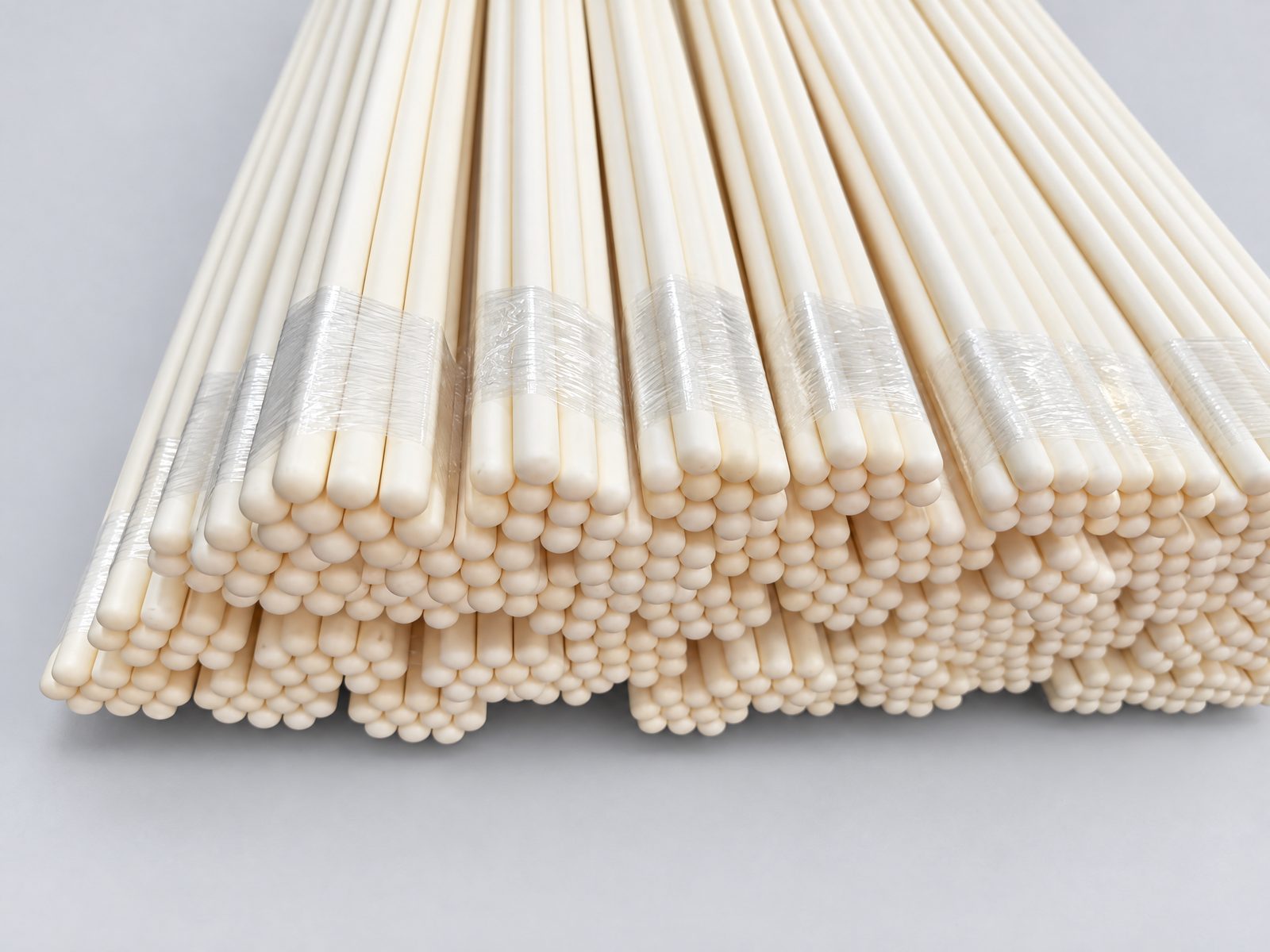
GY Alumina makes dense kiln-sintered alumina and corundum ceramic parts for high-temperature furnaces, thermal processing equipment, laboratories, and industrial pyrometry systems. Whereas laser-based metal powder bed fusion melts metallic alloy powders layer by layer on a build plate, technical oxide ceramics are consolidated from ceramic powders through green forming followed by high-temperature kiln sintering.
Engineers operating metal heat-treatment furnaces, hot isostatic pressing systems, and melting laboratories source sintered alumina hardware where high heat and electrical insulation are required. Our product range covers ceramic thermocouple protection tubes, thermocouple insulators and multi-bore tubes, furnace tubes, crucibles and boats, solid alumina rods, and custom ceramic parts made to your drawing or sample. Send your drawing, the grade and the quantity. We usually reply with a quote within two working days.
Questions buyers ask
- How do ISO and ASTM standards classify direct metal sintering?
- ISO/ASTM 52900 places the technology under additive manufacturing, and ISO/ASTM 52911-1 classifies the laser process specifically as laser-based powder bed fusion of metals. In ASTM alloy specifications such as ASTM F2924 and ASTM F3055, it is termed full-melt powder bed fusion, specifically laser melting.
- Does direct metal sintering only sinter metal powder or fully melt it?
- Industrial metal powder bed fusion systems governed by ASTM F2924, F3001, F3055, and F3056 operate by full-melt powder bed fusion, including laser melting and electron beam melting. Components manufactured to these specifications are built for applications requiring mechanical properties similar to machined forgings and wrought products.
- Which titanium and nickel alloys have ASTM powder bed fusion specifications?
- Active ASTM Subcommittee F42.05 specifications cover titanium alloy Ti-6Al-4V under ASTM F2924, extra-low interstitial Ti-6Al-4V ELI under ASTM F3001, nickel alloy UNS N07718 under ASTM F3055, and nickel alloy UNS N06625 under ASTM F3056.
- Do laser powder bed fusion metal parts require post-processing?
- According to ASTM F2924, F3001, F3055, and F3056, full-melt powder bed fusion components incorporate thermal processing and hot isostatic pressing as specified, and are commonly post-processed by machining, grinding, electrical discharge machining (EDM), and polishing to achieve target surface finishes and critical dimensions.
- What standards govern critical applications and purchased metal AM parts?
- ISO/ASTM 52904 governs machine operation and production control for metal powder bed fusion in critical applications where part failure leads to immediate threats, while ASTM F3472 covers qualification of aerospace laser metal powder bed fusion machines. For procurement, ISO/ASTM 52901 defines the order, feedstock, property, and acceptance requirements exchanged between customers and part providers.
Sources
- ISO/ASTM 52911-1:2019 Design for Laser-Based Powder Bed Fusion of Metals
- ISO/ASTM 52900:2021 Additive Manufacturing Fundamentals and Vocabulary
- ISO/ASTM 52904:2024 Metal Powder Bed Fusion Process for Critical Applications
- ISO/ASTM 52920:2023 Requirements for Industrial AM Processes and Production Sites
- ISO/ASTM 52901:2017 Requirements for Purchased AM Parts
- ISO/TC 261 Additive Manufacturing Technical Committee Structure
- TC 261 Global Additive Manufacturing Committee Portal
- ASTM F2924-14(2021) Standard Specification for AM Ti-6Al-4V with Powder Bed Fusion
- ASTM F3001-14(2021) Standard Specification for AM Ti-6Al-4V ELI with Powder Bed Fusion
- ASTM F3055-14a(2021) Standard Specification for AM Nickel Alloy UNS N07718 with Powder Bed Fusion
- ASTM F3056-14(2021) Standard Specification for AM Nickel Alloy UNS N06625 with Powder Bed Fusion
- ASTM F3472-20 Acceptance Tests for Aerospace Laser Metal Powder-Bed Fusion Machines
- ASTM Committee F42 on Additive Manufacturing Technologies
- ASTM Committee F42 Subcommittees Overview
Last checked .