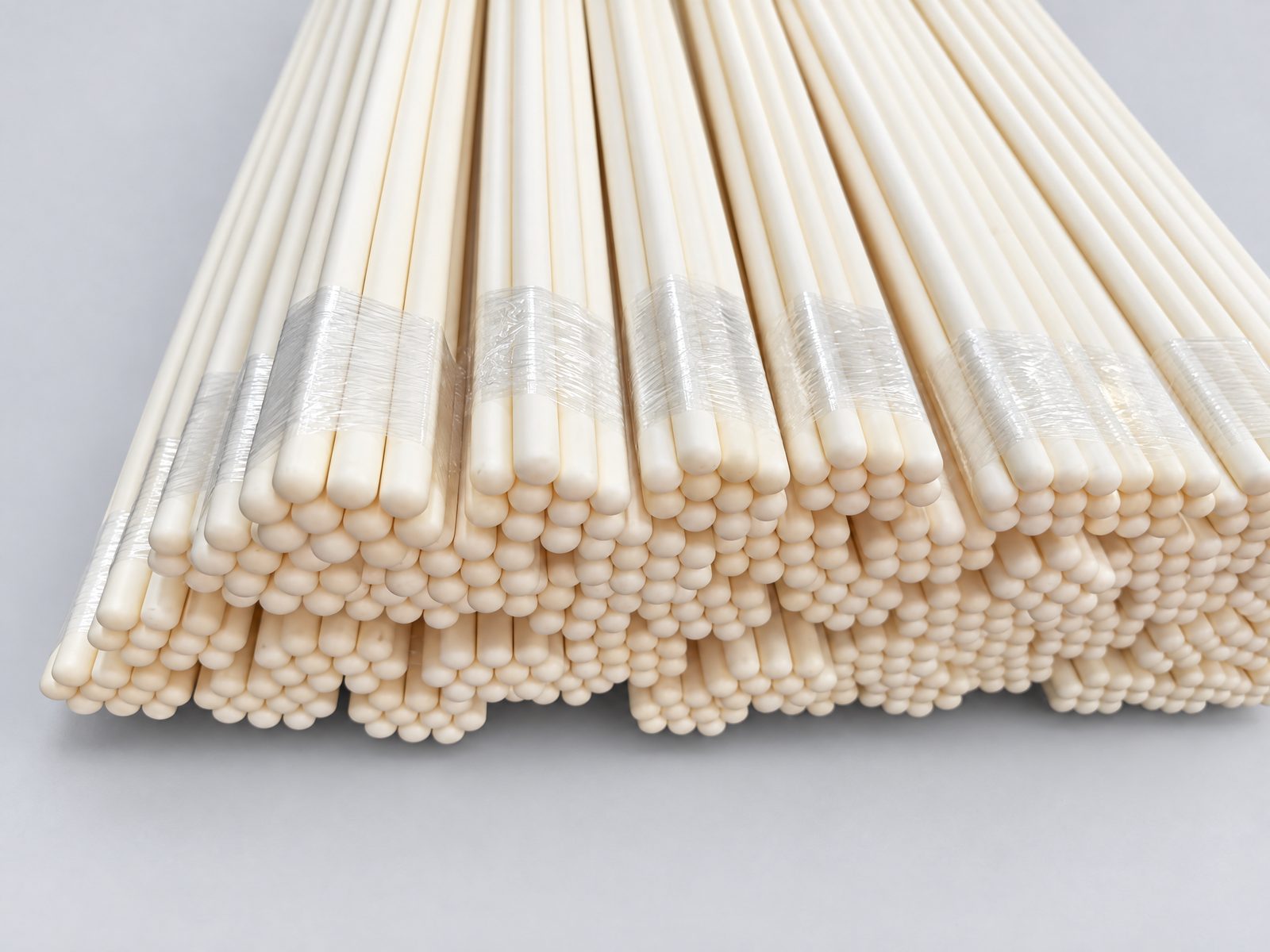
A ballistic ceramic plate, also called a ceramic ballistic plate, ceramic rifle plate, or hard armor plate, is defined under ASTM E3078/E3078M-23 and ASTM E3005-24 as rigid personal protective equipment intended to protect the wearer against ballistic threats, stabbing, fragmentation, or blunt impact. Engineering standards maintained by ASTM Committee C28 (which oversees 55 active advanced ceramic standards) and Subcommittee E54.04 (which oversees 30 active public safety equipment standards) govern how monolithic ceramic strike faces and backing assemblies are conditioned and tested for penetration resistance and backface deformation.
What Is a Ballistic Ceramic Plate and How Does It Work
In engineering and public safety standards, a ballistic ceramic plate, ceramic ballistic plate, or ceramic rifle plate is formally classified as a hard armor plate. Under ASTM E3078/E3078M-23 and ASTM E3005-24, hard armor is personal protective equipment built from rigid materials to protect the wearer from ballistic threats, stabbing, fragmentation, blunt impact, or combinations of those hazards. ASTM Committee C28 on Advanced Ceramics notes that technical ceramic standards play a major role in armor systems alongside thermal systems, fuel cells, sensors, electronics, coatings, and catalyst substrates.
A ceramic rifle plate works as a two-stage mechanical assembly during projectile impact. The rigid monolithic ceramic strike face meets the incoming projectile tip first, using high compressive resistance and hardness to blunt, fracture, and erode the penetrator while spreading kinetic force over a wider area. Behind the strike face, a ductile backing layer catches fragments and absorbs remaining kinetic energy.
In ballistic resistance evaluations under ASTM E3107/E3107M-23, laboratories mount test items onto a clay block backing assembly and test hard armor plates either as standalone items or as in-conjunction-with (ICW) armor paired with soft body armor. Under ASTM E3068-20(2026), torso plates are produced and evaluated in both planar (flat) and nonplanar (curved) geometries to fit human torso contours.
Oxide Ceramics vs. Non-Oxide Carbides in Strike Faces
Engineers comparing monolithic strike-face ceramics evaluate flexural strength, equibiaxial flexural strength, and fracture toughness. Under ASTM C1161-18(2023), ambient flexural strength testing applies to advanced ceramics with a strength of 50 MPa (about 7 ksi) or higher, assuming a homogeneous, isotropic, linearly elastic body whose average grain size does not exceed one-fiftieth of the beam thickness.
A primary material distinction separates oxide ceramics (such as aluminum oxide, Al2O3) from non-oxide carbides and nitrides. Oxide ceramics, glasses, and ceramics with boundary-phase glass experience environmentally assisted slow crack growth at room temperature because liquid water and air humidity accelerate crack extension unless testing occurs in dry nitrogen gas, oil, vacuum, or at faster loading rates.
By contrast, boron carbide, silicon carbide, aluminum nitride, and many silicon nitrides show no sensitivity to slow crack growth at room temperature, so their ambient laboratory flexural strength equals their inert flexural strength. For broader electrical and structural material classification, IEC 60672-1:1995 (Edition 2.0, published 1995-06-27, stability date 2029, 29 pages) defines international classes for ceramic, glass, and glass-ceramic insulating materials.
| Ceramic Material Group | Room-Temperature Slow Crack Growth | Ambient vs. Inert Strength and Test Scope |
|---|---|---|
| Boron carbide and silicon carbide | No sensitivity at room temperature | Ambient laboratory strength equals inert flexural strength for monolithic, particulate, or whisker-reinforced bodies |
| Aluminum nitride and silicon nitrides | No sensitivity for aluminum nitride and many silicon nitrides | Ambient laboratory strength equals inert flexural strength above 50 MPa (about 7 ksi) |
| Oxide ceramics and boundary-phase glass ceramics | Susceptible to liquid water and air humidity at room temperature | Inert strength testing requires dry nitrogen gas, oil, vacuum, or faster loading rates |
| Continuous fiber-reinforced ceramic composites | Governed by composite matrix and fiber interface mechanics | Excluded from isotropic beam theory and not recommended for concentric-ring flexure |
Biaxial Flexure and Fracture Toughness Characterization
When a projectile strikes a hard plate, the back face of the ceramic tile experiences multiaxial tension opposite the impact point. ASTM C1499-19(2024) states that ceramic engineering applications frequently involve biaxial tensile stresses, and equibiaxial flexural resistance measures the lowest flexural strength of a monolithic advanced ceramic. Concentric-ring monotonic testing evaluates weakest-link flaw distributions across machined or limited-warpage as-fired specimens while keeping edge stresses minimal so edge machining flaws do not skew results.
Uniaxial flexure testing uses rectangular bars in four-point-1/4-point or three-point bending, with standard bars measuring 3 by 4 by 45 to 50 mm on a 40 mm outer span (or half or double sizes). Four-point loading is preferred for material characterization because three-point bending stresses only a small volume of the bar and produces higher apparent strength numbers.
Resistance to crack extension in brittle ceramics is quantified by fracture toughness (KIc). ASTM C1421-18(2025) defines three SI-unit beam methods at ambient temperature: precracked beam (KIpb, straight-through crack via bridge flexure), surface crack in flexure (KIsc, semi-elliptical crack via Knoop indentation), and chevron-notched beam (KIvb). While KIpb and KIvb measure resistance to large sharp cracks, KIsc measures small cracks similar in scale to natural fracture flaws. Internationally, ISO 23146:2012 (Edition 2, 17 pages) specifies the single-edge V-notch beam (SEVNB) four-point bending method for monolithic ceramics with a grain or major microstructural feature size above about 1 micrometer, and is not recommended for yttria tetragonal zirconia polycrystal (Y-TZP).
| Standard | Property Measured | Fixture and Crack Geometry | Key Technical Scope |
|---|---|---|---|
| C1161 | Uniaxial flexural strength | Rectangular 3 by 4 by 45 to 50 mm bar on 40 mm four-point or three-point span | Applies to ceramics at 50 MPa (about 7 ksi) or higher with average grain size at most one-fiftieth of beam thickness |
| C1499 | Monotonic equibiaxial flexural strength | Concentric-ring fixture under monotonic uniaxial loading in SI units | Measures least flexural strength under multiaxial tension on isotropic ceramics |
| C1421 | Fracture toughness (KIpb, KIsc, KIvb ) | Bridge-flexure precrack, Knoop indentation surface crack, or chevron-notched beam | Compares large sharp crack resistance (pb, vb) against small natural-scale flaws (sc) |
| ISO 23146 | Fracture toughness via SEVNB | Single-edge V-notched bar loaded in four-point bending until fracture | Applies where grain or feature size exceeds about 1 micrometer, not recommended for Y-TZP |
Hard Armor Pre-Conditioning and Durability Testing
Read more
Because brittle ceramic strike faces and polymer backings face heat, moisture, transport vibration, and accidental drops in field service, procurement programs apply pre-conditioning exposures before live-fire testing. ASTM E3078/E3078M-23 defines 10 conditioning procedures so certifiers and purchasers can select the exact exposures required for a given plate, separating impact durability procedures for torso front and back plates from impact durability procedures for other plates such as side plates.
The conditioning practice leaves pass/fail thresholds and mandatory radiographic (X-ray) checks to the purchasing specification, and recommends a thorough visual examination of every test item before and after conditioning exposures to document physical changes.
- Ambient and thermal procedures: Controlled ambient conditioning, thermal/temperature shock, and temperature extremes exposures.
- Weathering and operational environments: Weathering, fluid exposure, and altitude exposure procedures.
- Mechanical wear simulation: Vibration conditioning procedure representing vehicle and transport movement.
- Drop and impact durability: Impact durability pre-conditioning, impact durability procedure for torso front and back plates, and impact durability procedure for other plates.
Ballistic Penetration, Backface Deformation, and Ballistic Limit Testing
U.S. Department of Defense and U.S. Department of Justice body armor specifications require evaluating penetration resistance, backface deformation (BFD), and ballistic limit velocity data using Subcommittee E54.04 test standards. Firing takes place on indoor ranges under ASTM E3062/E3062M-20(2026), which specifies range dimensions, alignment, temperature, humidity, lighting, test barrels, light screens, radar, high-speed cameras, projectile velocity, and yaw measurement for non-contact small arms and fragmentation shots.
Before firing, plates are mounted on a calibrated block of ROMA Plastilina No. 1 witness clay prepared under ASTM E3004-22 using a conditioning chamber, backing fixture, bridge gauge, and either a cylindrical or spherical clay-verification impactor before testing, between test items, and after the final shot. Laboratories fire threats listed in the purchaser's test threats document to record complete or partial penetrations, measure partial-penetration crater depth in the clay using contact instrumentation, and run variable-velocity firing under ASTM E3110/E3110M-22 to collect ballistic limit data.
| Test Stage | Standard | Equipment and Setup | Verification or Output |
|---|---|---|---|
| 1. Range setup | E3062/E3062M | Indoor range, receiver, test barrels, light screens, radar, high-speed cameras | Controls alignment, environment, projectile velocity, and yaw on non-contact shots |
| 2. Clay verification | E3004 | ROMA Plastilina No. 1 clay block, conditioning chamber, bridge gauge, cylindrical or spherical impactor | Verifies witness clay consistency before testing, between items, and after final shot |
| 3. Penetration firing | E3107/E3107M | Hard armor plates, soft armor, ICW armor, and shoot packs on clay block | Records complete or partial penetrations against the test threats document |
| 4. BFD measurement | E3068 | Contact measurement gauge on planar or nonplanar clay backing | Measures clay crater depth caused by partial-penetration impacts |
| 5. Ballistic limit | E3110/E3110M | Specified mounting and variable-velocity firing protocols on torso armor | Collects complete vs. partial penetration velocity data for ballistic limit calculations |
Body Armor Program Management, Sizing, and Specification Plan
Read more
ASTM Committee C28 (formed in 1986, with 78 members) maintains 55 active standards in Volume 15.01 of the Annual Book of ASTM Standards, while Subcommittee E54.04 maintains 30 active standards and 2 proposed new work items in Volume 15.08.
For law enforcement, corrections, and security agencies, ASTM E3195-26 guides body armor program planning, procurement, care, and retirement across concealable soft, hard plate, tactical, stab-resistant, and multi-threat armor. It incorporates the National Institute of Justice (NIJ) body armor program as a provider of performance standards, guidance, and certification, while advising agencies outside the United States to consult their applicable national certification bodies. Related public safety standards cover wearer measurement and fitting (ASTM E3003-25), armor selection for non-law enforcement first responders (ASTM E3348/E3348M-25), and ballistic-resistant body armor accessories (ASTM E3453/E3453M-24).
- Step 1 - Define the test threats document: Specify exact ammunition calibers, velocities, maximum allowable BFD depth, and standalone or ICW configuration through your agency specification or NIJ certification tier.
- Step 2 - Select pre-conditioning and inspection requirements: Choose the applicable thermal, fluid, vibration, and torso impact durability procedures and state whether pre- and post-conditioning visual or radiographic inspections are required.
- Step 3 - Audit ceramic mechanical test data: Review four-point flexure, concentric-ring equibiaxial flexure, and fracture toughness test reports for the monolithic strike-face ceramic.
- Step 4 - Verify range and witness clay calibration: Require test reports from compliant indoor ranges documenting non-contact projectile yaw and ROMA Plastilina No. 1 impactor drop verifications.
- Step 5 - Fit wearers and manage service life: Measure personnel using standardized fitting practices and track carrier fit, storage, inspection, and replacement under a written management plan.
Industrial Alumina Ceramics Manufactured by GY Alumina
At GY Alumina, our standard grade is C799 (99.5% Al2O3), and we also supply 95% white alumina plus crucibles in 99% and 99.5% Al2O3. Where an engineering drawing names C 610 (in IEC 60672 a mullite class, 50-65% Al2O3), we supply 95% white alumina or our standard C799 instead, and neither is mullite. An independent lab analyzes one of our alumina tubes every year, recording 99.55% Al2O3 (2024), 99.57% (2025), and 99.61% (2026), and our ISO 9001:2015 certificate covers the manufacturing of ceramic protective tubes for thermocouples.
We form technical alumina components by slip casting, pressing, extrusion, and hot pressing, and sinter our corundum (99.5% Al2O3) ware at about 1,760 °C (a firing temperature, not a service rating). Custom parts made to your drawing or sample include round, elliptical, and square tubes (open or one end closed), single-, twin-, and multi-bore tubes and capillaries, threaded, ribbed, perforated, and slotted tubes, solid rods, square bars, balls, rings, washers, bushings, discs, crucibles, and boats. Our largest extruded tube today is OD 17 x ID 10 mm, and our largest slip-cast tube is OD 100 x ID 90 x 1,000 mm.
Custom parts to drawing usually start at 100 pieces per item and take 25-30 days to produce, with 5-10 free samples sent for approval first while the buyer pays the courier. Send your drawing, the grade and the quantity. We usually reply with a quote within two working days.
Questions buyers ask
- What is the official ASTM definition of a hard armor plate?
- Under ASTM E3078/E3078M and ASTM E3005-24, hard armor (also called a hard armor plate or plate) is personal protective equipment constructed of rigid materials intended to protect the wearer from ballistic threats, stabbing, fragmentation, blunt impact, or combinations of these threats.
- Why do oxide ceramics and non-oxide carbides behave differently in room-temperature strength tests?
- Oxide ceramics are susceptible to environmentally assisted slow crack growth at room temperature from liquid water or air humidity. Boron carbide, silicon carbide, aluminum nitride, and many silicon nitrides have no sensitivity to slow crack growth at room temperature, so their ambient laboratory flexural strength equals their inert flexural strength.
- How do laboratories measure backface deformation on a ballistic ceramic plate?
- Under ASTM E3107/E3107M-23 and ASTM E3004-22, the hard armor plate is mounted on a calibrated block of ROMA Plastilina No. 1 witness clay. When a test shot produces a partial penetration, technicians use the contact measurement method in ASTM E3068-20(2026) to measure the depth of the crater formed in the clay backing.
- What conditioning tests apply to hard armor plates before ballistic firing?
- Certifiers and purchasers select from 10 standardized conditioning procedures: controlled ambient conditioning, thermal/temperature shock, temperature extremes, weathering, fluid exposure, altitude exposure, vibration conditioning, impact durability pre-conditioning, impact durability for torso front and back plates, and impact durability for other plates.
- Why is equibiaxial flexural strength tested on monolithic ceramics?
- Under ASTM C1499-19(2024), resistance to equibiaxial flexure measures the lowest flexural strength of a monolithic advanced ceramic under multiaxial tension. Concentric-ring loading samples surface flaw distributions across planar orientations while keeping specimen edge stresses minimal.
Sources
- ASTM Subcommittee E54.04 on Public Safety Equipment
- ASTM Committee C28 on Advanced Ceramics
- ASTM E3078/E3078M-23 Standard Practice for Conditioning of Hard Armor Test Items
- ASTM E3107/E3107M-23 Standard Test Method for Resistance to Penetration and Backface Deformation for Ballistic-resistant Torso Body Armor and Shoot Packs
- ASTM E3068-20(2026) Standard Test Method for Contact Measurement of Backface Deformation in Clay Backing During Body Armor Testing
- ASTM E3004-22 Standard Specification for Preparation and Verification of Clay Blocks Used in Ballistic-Resistance Testing of Torso Body Armor
- ASTM E3062/E3062M-20(2026) Standard Specification for Indoor Ballistic Test Ranges for Small Arms and Fragmentation Testing of Ballistic-resistant Items
- ASTM E3110/E3110M-22 Standard Test Method for Collection of Ballistic Limit Data for Ballistic-resistant Torso Body Armor and Shoot Packs
- ASTM E3005-24 Standard Terminology for Body Armor and Ballistic Protection
- ASTM E3195-26 Standard Guide for Body Armor Program Management
- ASTM C1161-18(2023) Standard Test Method for Flexural Strength of Advanced Ceramics at Ambient Temperature
- ASTM C1499-19(2024) Standard Test Method for Monotonic Equibiaxial Flexural Strength of Advanced Ceramics at Ambient Temperature
- ASTM C1421-18(2025) Standard Test Methods for Determination of Fracture Toughness of Advanced Ceramics at Ambient Temperature
- ISO 23146:2012 Fine ceramics, Test methods for fracture toughness of monolithic ceramics, Single-edge V-notch beam (SEVNB) method
- IEC 60672-1:1995 Ceramic and glass insulating materials - Part 1: Definitions and classification
Last checked .