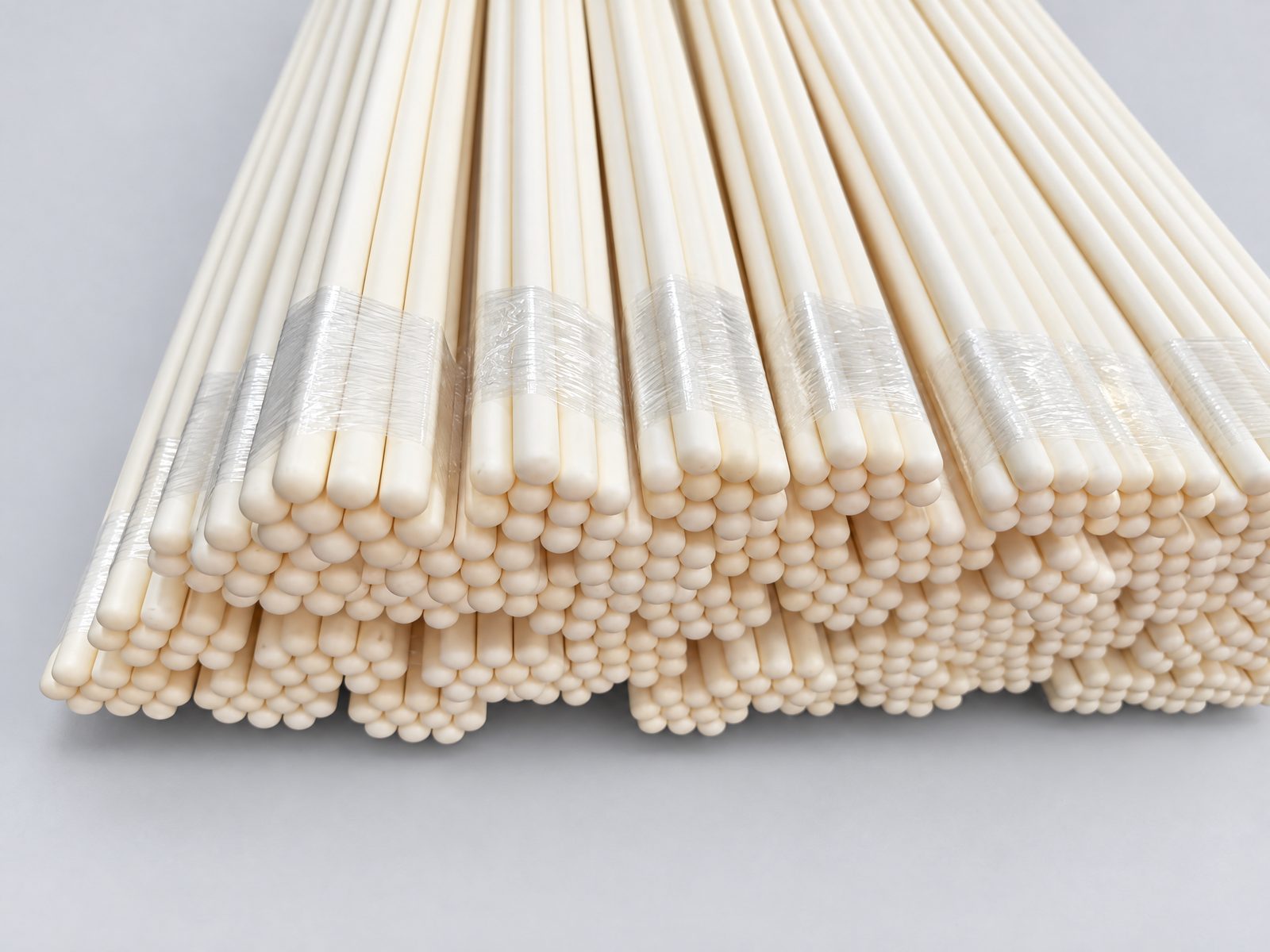
Activated alumina filters use porous aluminum oxide (Al2O3) media to capture gaseous contaminants and fluid degradation products on internal pore surfaces. For general ventilation, ISO 10121-1:2014 classifies solid gas-phase air cleaning media into 3 configurations (loose-fill particles, flat-sheet fabrics, and thick 3D structures), while ISO 10121-2:2013 tests complete full-scale gas-phase air cleaning devices (GPACDs). Unlike dense sintered C799 alumina ceramic tubes, activated alumina filtration media relies on high internal surface area measured by the BET gas adsorption method in ISO 9277:2022.
How Activated Alumina Filters and Filtration Work
An activated alumina filter is a molecular or fluid treatment element packed or formed with porous aluminum oxide (Al2O3) media rather than a simple mechanical screen. While a particulate filter traps solid dust or sediment by sieve size, activated alumina filtration captures dissolved molecules, vapors, and corrosive gases on a network of microscopic internal pores.
Because filtration capacity depends directly on accessible pore wall area, industrial buyers verify media porosity through gas adsorption testing. Published in November 2022 by Technical Committee ISO/TC 24/SC 4, ISO 9277:2022 (22 pages, Edition 3) specifies how laboratories determine the overall specific external and internal surface area of disperse or porous solids by measuring physically adsorbed gas with the BET method, following the 2015 International Union for Pure and Applied Chemistry (IUPAC) recommendations.
Many gas-phase air filters combine porous alumina with active chemical phases or catalytic metals to neutralize target gases permanently. When a solid has a chemically heterogeneous surface, such as a metal-carrying catalyst, the BET method gives the overall specific surface area, whereas chemisorption methods measure the active metallic portion of the surface area.
Porous activated alumina media handles gas-phase adsorption and liquid reclamation. Dense or crushable Al2O3 powders and ceramic insulators, covered for thermocouple and thermometer manufacturing by ASTM E1652-21R26, provide high-temperature electrical insulation and structural protection. Electronic passive filter units, covered by IEC 60939-1:2010 (68 pages, Edition 3.0, stability date 2030), suppress electromagnetic interference in electrical machines and have no fluid or chemical filtration role.
Media Formats: Loose-Fill Beds, Flat Sheets, and 3D Elements
When you specify an activated alumina filter for air handling or process exhaust, the physical geometry of the media dictates pressure drop, residence time, and housing design. ISO 10121-1:2014 (40 pages, Edition 1, published by Technical Committee ISO/TC 142 and confirmed current in 2019) defines an objective laboratory challenge test method for solid gas-phase air cleaning media (GPACM) used in general filtration.
Part 1 divides solid gas-phase media into 3 distinct configurations. Loose-fill media (GPACM-LF) consists of granular or spherical particles of varying shapes and sizes poured into refillable trays, V-bank modules, canister cylinders, or deep-bed scrubbers. Flat-sheet media (GPACM-FL) incorporates adsorbent particles into a fabric web for single-layer panels, pleated cartridges, or bag filters. Thick structure media (GPACM-TS) forms rigid 3D blocks, monoliths, or bonded elements many times thicker than a flat sheet for drop-in device installation.
Under Part 1, laboratories expose media samples in a standardized holder to test gases inside a controlled air stream under steady-state conditions. Because lab challenge tests run at elevated gas concentrations compared with ambient building ventilation, the standard restricts how you use the resulting numbers. You can use Part 1 data to compare one loose-fill media batch against another GPACM-LF candidate, but you cannot compare GPACM-LF numbers directly against GPACM-FL pleated sheets, and you cannot use raw media challenge curves alone to predict exact field service life.
| Classification Code | Physical Form | Typical Filter Hardware | Governing Standard | Valid Data Comparison Scope |
|---|---|---|---|---|
| GPACM-LF | Loose-fill particles of varying shape and size | Refillable trays, canisters, packed beds, loose fill air filters | ISO 10121 Part 1 | Compare only against other GPACM-LF loose-fill media |
| GPACM-FL | Flat-sheet fabric media | Single-layer flat panels, pleated cartridges, bag-type filters | ISO 10121 Part 1 | Compare only against other GPACM-FL flat-sheet fabrics |
| GPACM-TS | 3D structures many times thicker than flat sheets | Finished molded blocks, honeycombs, thick composite cartridges | ISO 10121 Part 1 | Compare only against other GPACM-TS 3D structures |
| GPACD | Complete full-size gas filtration assembly | Packed columns, absorbers, scrubbers, modular air cleaners | ISO 10121 Part 2 | Compare complete devices directly on price and gas removal |
Testing Full-Scale Gas-Phase Air Cleaning Devices (GPACD)
Media pellet specifications do not capture bypass leakage, bed channeling, or air velocity distribution inside a finished housing. To evaluate an assembled activated alumina filtration unit, engineers specify testing under ISO 10121-2:2013 (38 pages, Edition 1, published by Technical Committee ISO/TC 142 and confirmed current in 2018).
Part 2 measures the gas-removal performance of any full-size gas-phase air cleaning device (GPACD) for general ventilation regardless of the internal media or sorption technique. The test method deliberately avoids tying test results to internal media parameters. That design protects supplier formulations from reverse engineering while letting facility purchasers compare complete commercial filtration assemblies side by side on verified removal efficiency, pressure loss, and total cost.
Rather than locking laboratories into one proprietary rig, Part 2 sets normative validation tests and apparatus property requirements while outlining common rig layouts in current use. The method applies to residential and non-residential general ventilation equipment, including packed columns, absorbers, scrubbers, and non-sorptive air cleaners, provided the unit fits the test rig and can be meaningfully evaluated by the protocol. Nuclear and military filtration systems are excluded from Part 2.
When drafting ventilation bid documents across regions, reference ISO 29464:2024 for standardized air and gas cleaning terminology so media vendors, HVAC contractors, and commissioning labs define gas-phase filter ratings in identical terms.
Worked Example: Specifying a Loose-Fill Gas-Phase Filter Assembly
Worked example written by our team. Suppose you are an industrial ventilation engineer specifying a refillable loose-fill activated alumina filter bank to control indoor chemical vapors, including airborne formaldehyde off-gassing in a commercial building.
First, establish the contaminant source basis and analytical benchmark. In building materials compliance, laboratories measure formaldehyde concentrations emitted from wood panel products under ASTM D6007-22 (9 pages, Subcommittee D07.03, Book of Standards Volume 04.10), an active small-scale chamber method referenced alongside EPA TSCA Title VI 40 CFR Section 770, California Air Resources Board (CARB) composite wood rules, Minnesota Statutes, and HUD 24 manufactured housing standards. The method tests conditioned specimens inside an environmental chamber ranging from 0.02 m3 to 1 m3 in volume under controlled temperature, relative humidity, air circulation, exposed surface area, and make-up airflow to surface area (Q/A) ratio, analyzing air samples via a modified NIOSH 3500 chromotropic acid procedure. By our calculation from ASTM D6007-22, the 1 m3 maximum chamber volume is 50 times the 0.02 m3 minimum chamber volume, giving testing labs a 50-fold chamber scaling span to match specimen size while holding loading ratios steady.
Second, shortlist candidate loose-fill alumina granules using like-for-like GPACM-LF steady-state gas challenge curves from Part 1, paired with specific pore surface area reports from the BET gas adsorption method (and chemisorption data if the pellet carries a metal or oxidizing phase). Do not accept flat-sheet GPACM-FL lab sheets as proof of packed-bed performance.
Third, require full-size GPACD test reports under Part 2 on the complete tray housing or packed column at your design airflow so bed depth, seal compression, and residence time are verified as a finished unit.
Fourth, match the metal filter housing and retaining screens to the airstream corrosion hazard. If the intake air carries acidic mists, coastal salt, or sulfur dioxide (SO2), specify cabinet and coating qualification under ASTM G85-19 (14 pages, Subcommittee G01.05, Volume 03.02). That practice defines 5 modified salt-spray environments for ferrous and nonferrous metals and organic or inorganic coatings: continuous acetic acid-salt spray (Annex A1), cyclic acidified salt spray (Annex A2), cyclic seawater acidified testing known as SWAAT (Annex A3), cyclic SO2 salt spray (Annex A4), and dilute electrolyte cyclic fog-dry testing (Annex A5).
Liquid-Phase Filtration, Oil Reclamation, and Water Standards
Read more
Beyond air and gas cleaning, porous alumina beds are widely deployed in liquid-phase adsorption, electrical insulating oil reclamation, compressed gas drying, and potable water treatment. Because liquid viscosity, dissolved ion competition, and fluid chemistry alter adsorption kinetics, liquid filtration follows separate industry standards from HVAC air cleaning.
In electrical power equipment such as transformers and switchgear, mineral insulating oil degrades under thermal and oxidative stress and requires periodic purification. IEC Technical Committee TC 10 splits oil governance by where reclamation occurs. IEC 60296:2020 (82 pages, Edition 5.0, published June 2020, stability date 2030) sets delivery specifications and test methods for unused mineral insulating oils and recycled oils restored offsite through re-refining or reclaiming (regeneration), grouping transformer oils into Type A and Type B by performance and incorporating thermo-oxidative stray gassing tests. On-site oil treatment falls under IEC 60422:2024 (140 pages, Edition 5.0, published July 2024, stability date 2030), which guides operators on oil sampling, condition monitoring, reconditioning, on-site reclaiming of mineral insulating oils and hydrocarbon-based liquids, and PCB decontamination.
If you are specifying activated alumina filtration for municipal or residential drinking water, compressed gas dehydration, or petrochemical refining, confirm the applicable liquid or process standard directly on the ASTM Compass platform. ASTM International indexes over 12,000 ASTM standards alongside standards from the American Water Works Association (AWWA) for potable water media, UOP and the American Petroleum Institute (API) for hydrocarbon adsorbents, and the Compressed Gas Association (CGA) for gas drying systems.
Procurement Checklist and Material Comparison
Read more
Buyers often lose time when an RFQ mixes up porous adsorbent filter refills with permanent sintered ceramic filter hardware. Use the checklist and comparison table below written by our team to keep media packages and custom ceramic part drawings clear.
- State the fluid phase and operating stream: indoor ventilation air, corrosive industrial exhaust, electrical insulating oil, compressed gas, or potable water.
- Request BET specific surface area reports for porous media, plus chemisorption test results if the media carries an active metallic or catalytic phase.
- Keep gas-phase media comparisons inside the same ISO 10121 configuration class (GPACM-LF against GPACM-LF, never loose fill against pleated fabric).
- Require full-scale GPACD performance and pressure-drop data for complete packed columns, modular cylinders, absorbers, or scrubbers.
- Specify corrosion testing under the matching ASTM G85 annex (such as Annex A4 cyclic SO2 salt spray or Annex A3 SWAAT) for metal frames and canisters in harsh atmospheres.
- Confirm pre-filtration, startup flushing procedures to clear loose fines, and on-site versus offsite reclamation or spent-media handling rules before commissioning.
- Separate consumable porous media orders from engineered drawings for permanent sintered ceramic support tubes, perforated spargers, and thermocouple protection assemblies.
| Specification Area | Porous Activated Alumina Filter Media | GY Alumina Dense Sintered Ceramic Parts |
|---|---|---|
| Primary Material Structure | High-porosity aluminum oxide granules, beads, or composite webs | |
| Core Function | Gas-phase molecular adsorption, desiccant drying, fluid reclamation | Structural tubes, perforated gas distributors, thermal and electrical insulation |
| Key Reference Standards | ISO 9277 BET porosity, ISO 10121 Part 1 and Part 2 gas cleaning | Material classes and insulator specs described in IEC 60672 and ASTM E1652 |
| Typical Shapes | Loose-fill beads (GPACM-LF), flat fabrics (GPACM-FL), 3D blocks (GPACM-TS) | Perforated and slotted tubes, multi-bore insulators, rings, discs, rods, crucibles |
| Supply Format from GY Alumina | Not manufactured by GY Alumina | Made to buyer drawing or sample, plus stock solid rods and standard tubes |
Dense Sintered C799 Alumina Parts for Filtration and Thermal Equipment
GY Alumina manufactures dense sintered C799 alumina and corundum ceramic parts rather than porous activated alumina adsorbent beads, desiccant pellets, or disposable water and air filter cartridges. In international standards, dense electrical and thermal alumina ceramics sit in a completely separate category from porous adsorbents: IEC 60672-1:1995 (Edition 2.0), IEC 60672-2:1999 (Edition 2.0), and IEC 60672-3:1997 (Edition 2.0) cover ceramic and glass electrical insulating materials, while ASTM E1652-21R26 (8 pages, Subcommittee E20.13, Volume 14.03) specifies Al2O3 and MgO powders and crushable insulators for base metal thermocouples, noble metal thermocouples, and metal-sheathed platinum resistance thermometers (PRTs), verified through breaking force testing, wet chemical analysis, fusion calorimetric analysis, quantitative analysis, and density determination.
Inside industrial scrubbers, packed adsorption columns, thermal regenerators, and high-temperature gas analyzers, engineers use our dense ceramic parts as permanent corrosion-resistant hardware around the media bed. Using slip casting, pressing, extrusion, and hot pressing, we produce perforated and slotted alumina tubes, closed-end tubes with drilled holes, round, elliptical, and square furnace tubes, rings, washers, bushings, discs, balls, solid alumina rods, crucibles, boats, and single-, twin-, and multi-bore thermocouple insulators and protection tubes.
Our secondary machining operations include cutting to length, end slotting, side holes, tube perforation, and closed ends with drilled holes to match your manifold, sparger, or bed-support layout. If your drawing specifies a perforated alumina diffuser tube, ceramic support grid ring, or thermocouple protection assembly for a filtration or regeneration vessel, we can review your print and supply free approval samples on custom runs with courier freight paid by the buyer. Send your drawing, the grade and the quantity. We usually reply with a quote within two working days.
Questions buyers ask
- What is the difference between GPACM-LF, GPACM-FL, and GPACM-TS in activated alumina filters?
- ISO 10121-1:2014 groups solid gas-phase air cleaning media into 3 formats: GPACM-LF covers loose-fill particles of varying sizes for packed beds and canisters, GPACM-FL covers flat-sheet fabrics for pleated or bag filters, and GPACM-TS covers thick 3D structures used as finished elements. Laboratory challenge data can only compare media within the exact same format.
- How is a complete activated alumina gas filtration unit tested for general ventilation?
- Complete full-size gas-phase air cleaning devices (GPACDs), including packed columns, scrubbers, and absorbers, are tested under ISO 10121-2:2013. The standard evaluates overall device performance without exposing proprietary media parameters, covering residential and commercial general ventilation while excluding nuclear and military systems.
- Which standard measures the internal pore surface area of activated alumina filter media?
- ISO 9277:2022 specifies the determination of overall external and internal specific surface area for porous solids by measuring physically adsorbed gas via the BET method, based on 2015 IUPAC recommendations. For chemically heterogeneous surfaces such as metal-carrying catalysts, chemisorption methods measure the active metallic surface portion.
- Which standards govern mineral insulating oil reclamation in transformers and switchgear?
- IEC 60296:2020 specifies requirements for unused mineral insulating oils and recycled oils regenerated offsite into Type A and Type B performance groups. For oil already in electrical equipment, IEC 60422:2024 provides supervision, sampling, reconditioning, and on-site oil reclaiming guidance.
- Does GY Alumina supply loose-fill activated alumina beads or perforated ceramic filter tubes?
- GY Alumina does not manufacture porous activated alumina adsorbent beads or filter cartridges. We manufacture dense sintered C799 alumina and 95% white alumina ceramic components to drawing, including perforated tubes, slotted tubes, closed-end tubes with drilled holes, rings, discs, solid rods, and thermocouple protection tubes.
Sources
- ISO 10121-1:2014 Gas-Phase Air Cleaning Media Test Method
- ISO 10121-2:2013 Gas-Phase Air Cleaning Devices Test Method
- ISO 9277:2022 Specific Surface Area of Solids by Gas Adsorption (BET Method)
- ISO Cleaning of Air and Other Gases Terminology Record
- ASTM D6007-22 Small-Scale Chamber Formaldehyde Test Method
- ASTM G85-19 Standard Practice for Modified Salt Spray (Fog) Testing
- ASTM E1652 Standard Specification for MgO and Al2O3 Powder and Crushable Insulators
- ASTM International Complete Standards List and ASTM Compass Overview
- IEC 60296:2020 Mineral Insulating Oils for Electrical Equipment
- IEC 60422:2024 Mineral Insulating Oils Supervision and Maintenance Guidance
- IEC 60939-1:2010 Passive Filter Units for Electromagnetic Interference Suppression
- International Electrotechnical Commission Standards Directory (SDG 10)
Last checked .